
Pressure Testing Leak Detection
Pressure testing is an accurate and efficient way to determine whether a pipe or central heating system is losing pressure due to a hidden leak. Using specialist equipment, our engineers can detect even very small pressure drops that may otherwise be difficult to identify.
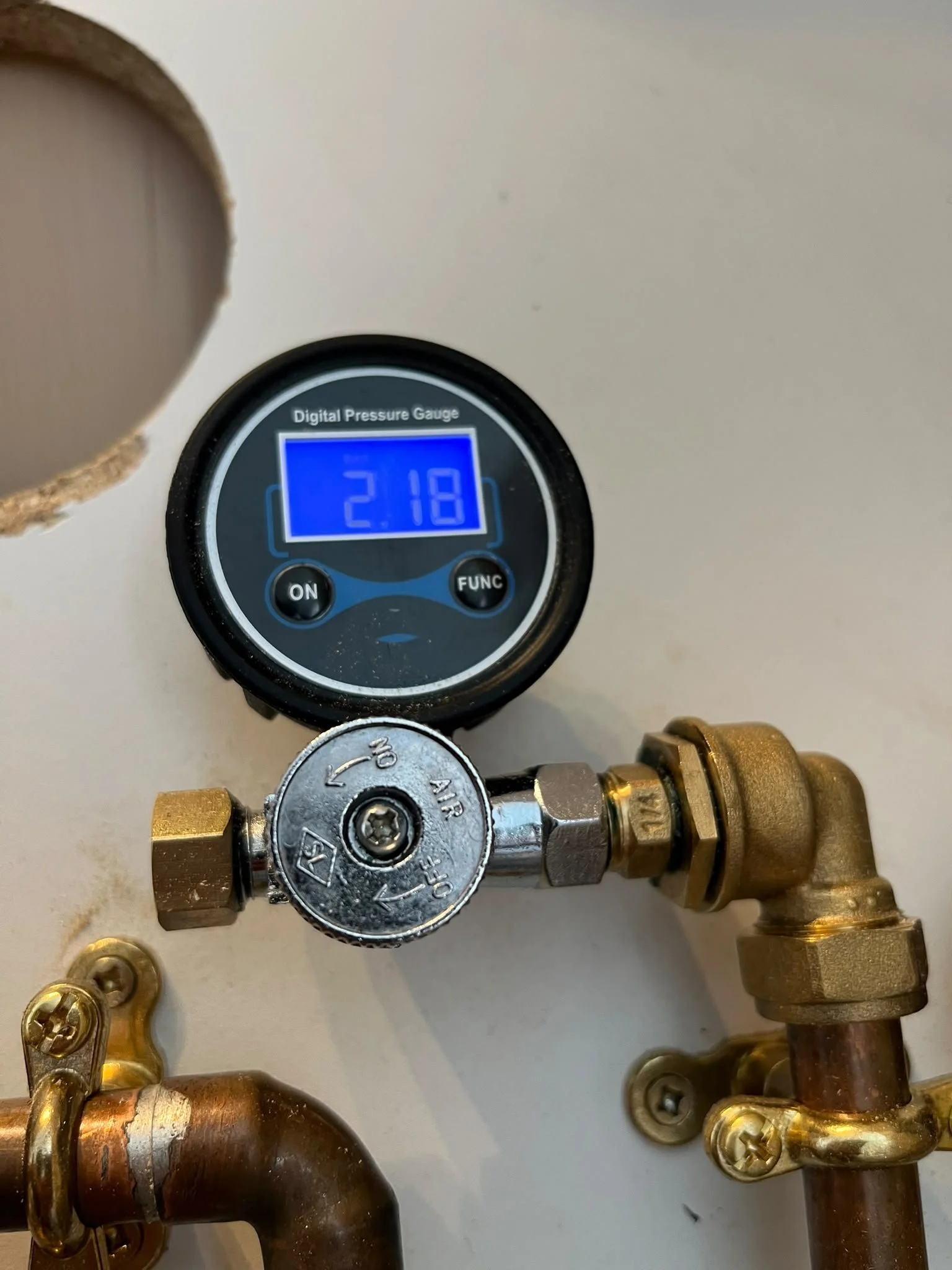
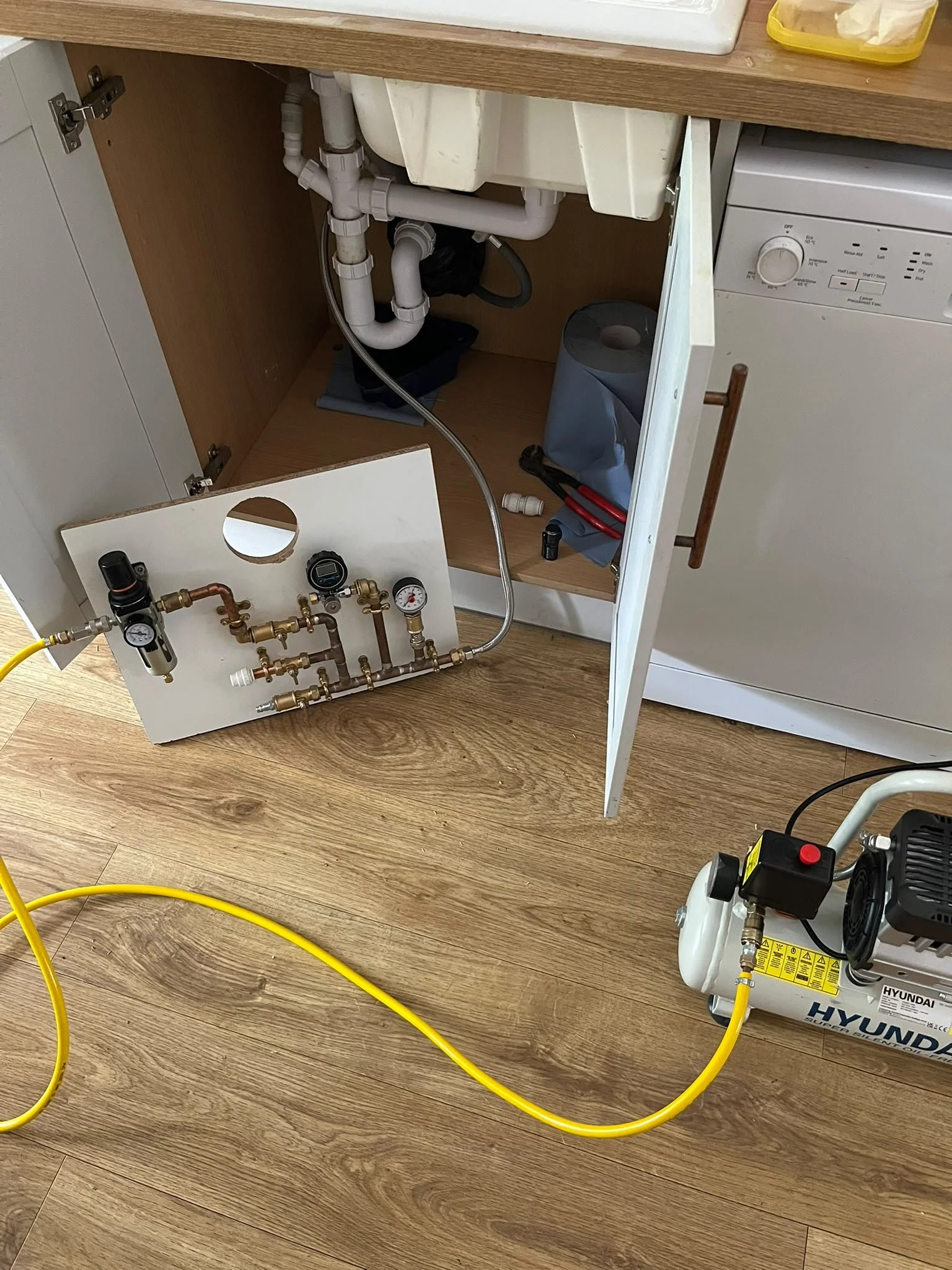
At Maystone Leak Detection, we use a specialist air compressor connected to a sophisticated pressure testing rig incorporating both digital and analogue pressure gauges. This gives our engineers precise control over the pressure introduced into a pipe or heating system and allows us to closely monitor even the smallest changes.
If the pressure begins to fall during testing, it can indicate that air is escaping from the system and a leak is present. The rate of pressure loss can also help our engineers understand the potential size of the leak and determine which detection method should be used next.
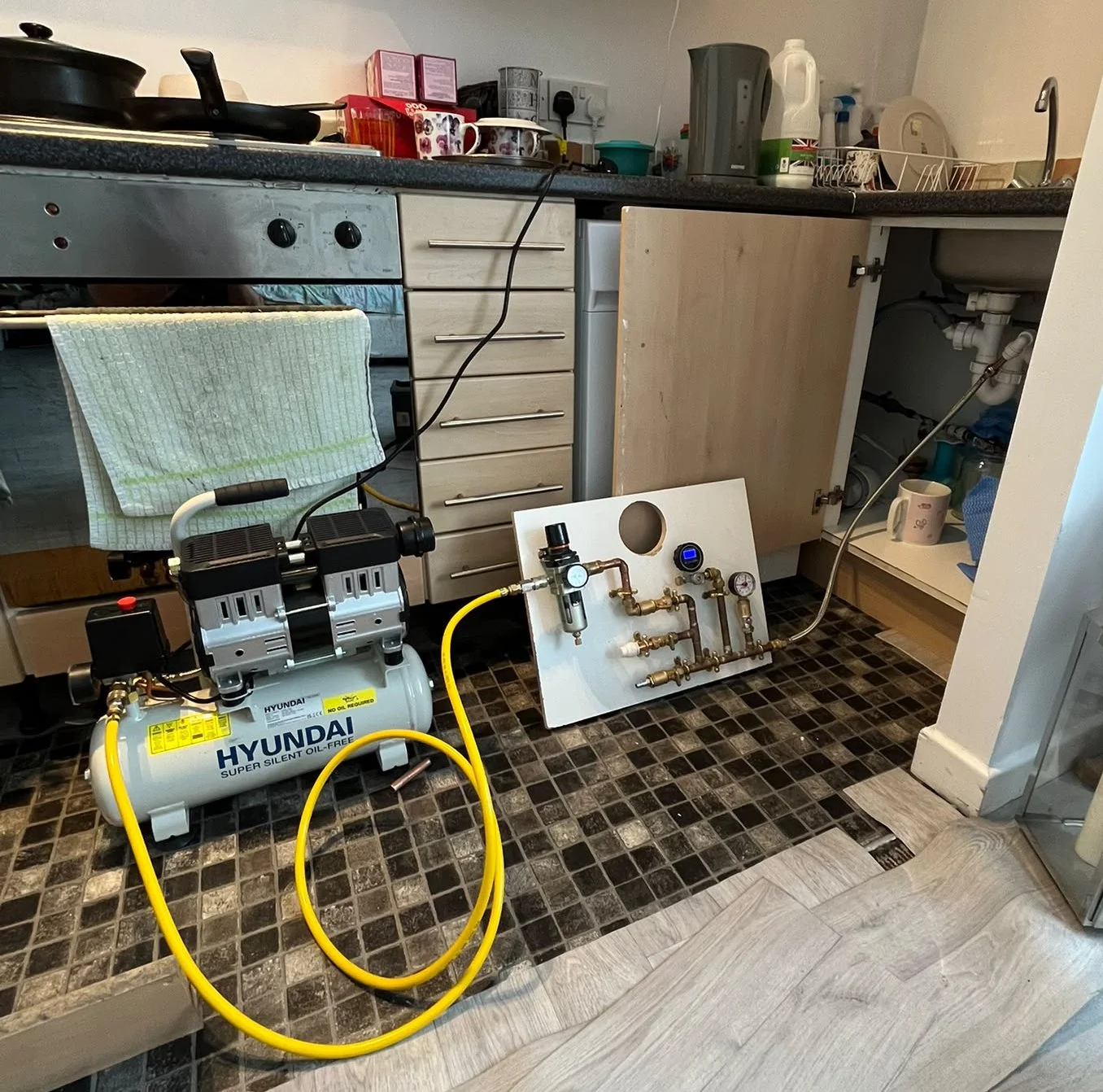
Technology:
Pressure Testing
Best for: Confirming whether pipework or a central heating system has a leak.
Invasive or Non-invasive: Non-invasive
Detects: Pressure loss that may indicate a leak within a pipe or system.
Used alone or with another technology? Acoustic profiling and other specialist leak detection methods.
Suitable for: Domestic & commercial properties.
When is pressure testing useful?
Confirming whether a leak is present
Detecting very small leaks
Central heating leak detection
Assessing the size of a leak
Testing hidden pipework
Testing larger pipe systems
Before using other detection technologies
Pinpointing leaks with acoustic profiling
How does Maystone use pressure testing for leak detection?
Pressure testing is used during many of our leak investigations to establish whether a pipe or central heating system is losing pressure. We introduce compressed air through our specialist testing rig, giving our engineers precise control over the test pressure while digital and analogue gauges monitor the system for even very small changes.
Where a leak is confirmed, we can then combine pressure testing with acoustic profiling to listen for the point at which air is escaping. This helps us move from simply confirming that a leak exists to accurately locating its source, while keeping unnecessary disruption to a minimum.
Benefits & limitations of pressure testing leak detection:
Detects small leaks
Confirms whether a leak is present
Helps assess the size of a leak
Fast and efficient
Useful for central heating systems
Suitable for hidden pipework
Works alongside acoustic detection
Efficient use of resources
Very large leaks can be difficult to pressurise
If an opening is particularly large, air may escape faster than the pipe can be pressurised, making a conventional pressure test more difficult.
It doesn't always locate the leak on its own
Pressure testing is excellent for confirming pressure loss, but additional technology such as acoustic profiling may be required to pinpoint exactly where the leak is located.
Why we combine technologies
At Maystone Leak Detection, we understand that every leak is different, which is why we never rely on a single detection method in isolation. While each technology has its own strengths, combining multiple techniques allows our engineers to build a clearer picture of what is happening within your property.
By comparing the results from advanced technologies such as thermal imaging, acoustic listening, moisture mapping, tracer gas testing and other specialist methods, we can accurately confirm the source of a leak before recommending any repairs.
This approach helps us provide a more accurate diagnosis, reduce unnecessary disruption and ensure the right solution is used for your specific situation.
Our leak detection technologies include:
Common Questions about pressure testing for leak detection:
-
Pressure testing involves introducing controlled pressure into a pipe or heating system and monitoring it for changes. A drop in pressure can indicate that air is escaping through a leak somewhere within the system.
-
Yes. The sensitive digital gauges used by our engineers can detect very small pressure changes, making pressure testing particularly useful when investigating small or difficult-to-find leaks.
-
Yes. Pressure testing can be used to determine whether a central heating system is losing pressure because of a leak, even when there is no visible sign of escaping water.
-
Pressure testing can confirm that a leak is present and help indicate its severity, but it may not identify the precise location on its own. We can combine it with acoustic profiling and other specialist technologies to accurately pinpoint the source.
Why choose Maystone?
Advanced technology. Experienced engineers. Accurate results.
Finding a hidden leak requires more than specialist equipment. It takes experience, knowledge and the right combination of technologies to accurately identify the source while minimising disruption to your property.
Experienced Leak Detection Engineers
Specialists in locating hidden leaks across domestic and commercial properties.

Advanced Detection Technology
Using thermal imaging, acoustic listening, tracer gas, moisture mapping and more to pinpoint leaks accurately.
Minimal Disruption
Non-invasive detection methods designed to avoid unnecessary damage.
Insurance-Friendly Reports
Clear, detailed reports to support insurance claims where required.
Residential & Commercial Expertise
Trusted by homeowners, landlords, businesses and property managers.
Five-Star Customer Service
Honest advice, clear communication and accurate leak detection trusted by our customers.